
Ramayana: The Epic Tale of Love, Duty, and Victory
The Ramayana stands as one of the most profound and timeless epics in human history, offering a powerful narrative that blends spirituality, morality, and cultural heritage. Traditionally attributed to the sage Valmiki, this ancient Sanskrit text beautifully captures the journey of Prince Rama, an incarnation of the divine, whose life exemplifies righteousness (dharma), devotion, and unwavering moral strength.
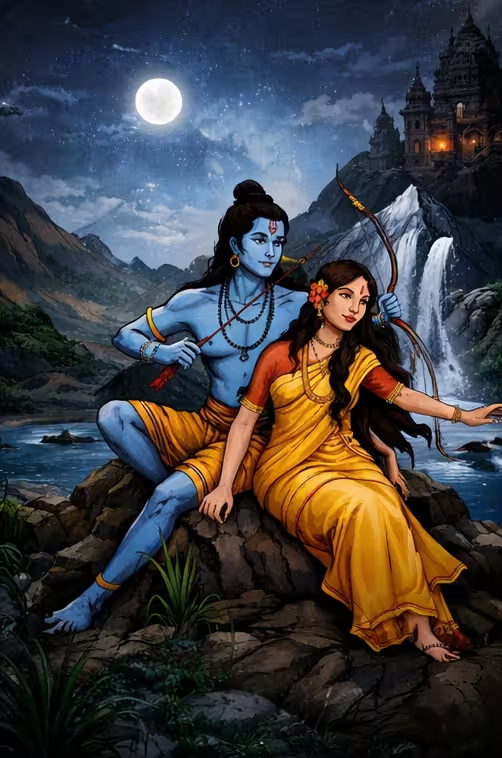
At its heart, the Ramayana is the story of Rama and his devoted wife Sita. Their life in the kingdom of Ayodhya begins in harmony and prosperity, but destiny soon takes an unexpected turn. Due to a royal promise and political circumstances, Rama is exiled to the forest for fourteen years. Without hesitation, Sita chooses to accompany her husband, embodying loyalty and love, while Rama’s brother Lakshmana joins them out of deep devotion.
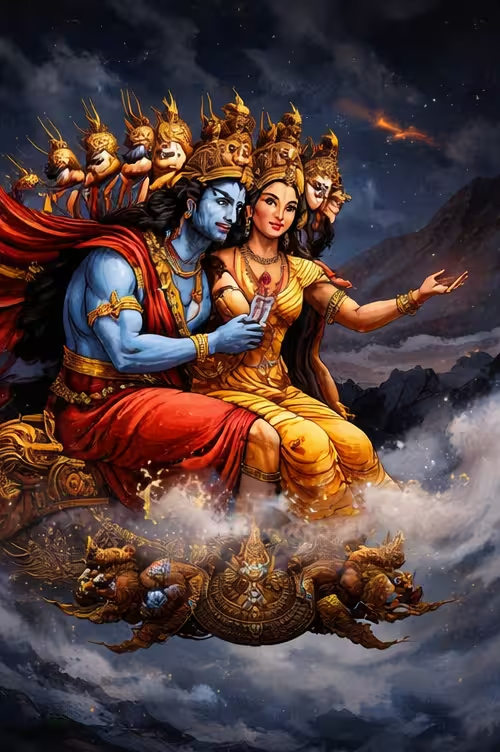
During their time in the wilderness, the trio encounters numerous challenges that test their courage and faith. However, the most dramatic and defining moment of the epic occurs when the powerful king Ravana, ruler of Lanka, abducts Sita and takes her across the ocean to his kingdom. This act of injustice sets the stage for one of the greatest battles ever described in mythology — the legendary war between Rama and Ravana, often referred to as the “Clash of the Titans.”
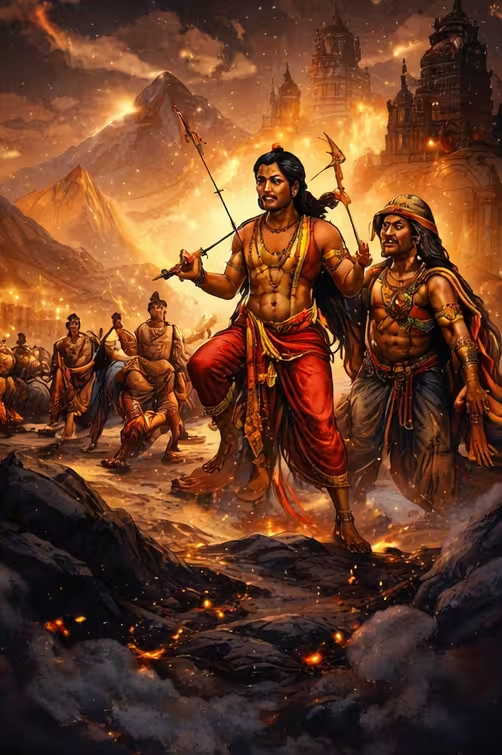
Determined to rescue Sita and restore justice, Rama forms an alliance with a devoted army of vanaras (monkey warriors), led by the noble and fearless Hanuman. Hanuman’s unwavering devotion, strength, and intelligence play a crucial role in locating Sita and aiding Rama’s mission. The journey to Lanka itself is symbolic of perseverance and faith, as Rama’s army constructs a bridge across the sea, demonstrating unity and determination.
The battle between Rama and Ravana is not merely a physical confrontation but a symbolic representation of the eternal struggle between good and evil. Ravana, though a powerful and learned king, is driven by pride and desire, while Rama represents virtue, discipline, and righteousness. The eventual victory of Rama signifies the triumph of dharma over adharma, reminding humanity that truth and justice will always prevail.
Beyond its central storyline, the Ramayana offers deep philosophical insights and spiritual teachings. It highlights the importance of duty, respect for relationships, loyalty, and the consequences of one’s actions. Each character in the epic serves as a model of certain virtues or flaws, providing timeless lessons for people across generations.
Ancient beliefs also suggest that divine forces took human form during this epic era. It is said that Lord Vishnu incarnated as Rama, while Goddess Lakshmi appeared as Sita. Similarly, Ravana and his brother Kumbakarna are believed to be incarnations connected to celestial beings, sent to Earth as part of a greater cosmic purpose — to guide humanity in understanding the difference between good and evil and to restore balance in the world.
Determined to rescue Sita and restore justice, Rama forms an alliance with a devoted army of vanaras (monkey warriors), led by the noble and fearless Hanuman. Hanuman’s unwavering devotion, strength, and intelligence play a crucial role in locating Sita and aiding Rama’s mission. The journey to Lanka itself is symbolic of perseverance and faith, as Rama’s army constructs a bridge across the sea, demonstrating unity and determination.
The battle between Rama and Ravana is not merely a physical confrontation but a symbolic representation of the eternal struggle between good and evil. Ravana, though a powerful and learned king, is driven by pride and desire, while Rama represents virtue, discipline, and righteousness. The eventual victory of Rama signifies the triumph of dharma over adharma, reminding humanity that truth and justice will always prevail.
Beyond its central storyline, the Ramayana offers deep philosophical insights and spiritual teachings. It highlights the importance of duty, respect for relationships, loyalty, and the consequences of one’s actions. Each character in the epic serves as a model of certain virtues or flaws, providing timeless lessons for people across generations.
Ancient beliefs also suggest that divine forces took human form during this epic era. It is said that Lord Vishnu incarnated as Rama, while Goddess Lakshmi appeared as Sita. Similarly, Ravana and his brother Kumbakarna are believed to be incarnations connected to celestial beings, sent to Earth as part of a greater cosmic purpose — to guide humanity in understanding the difference between good and evil and to restore balance in the world.
The influence of the Ramayana extends far beyond literature. It has shaped art, culture, dance, music, and religious practices across many countries, including India, Sri Lanka, Thailand, Indonesia, and beyond. In Sri Lanka, the Ramayana holds special significance as many locations are believed to be connected to events from the epic, forming what is popularly known as the Ramayana Trail. These sacred and historical sites attract thousands of visitors each year who seek to experience the legend firsthand.
Even today, the Ramayana continues to inspire millions of people around the world. Its teachings remain relevant in modern society, encouraging individuals to lead lives of integrity, compassion, and responsibility. The story reminds us that challenges and hardships are a natural part of life, but with faith, courage, and righteousness, they can be overcome.
In essence, the Ramayana is more than just an ancient tale — it is a guide for life. It teaches us how to uphold moral values, respect relationships, and strive for truth in every aspect of our journey. The legacy of Rama’s journey continues to illuminate the path for humanity, making the world a better and more harmonious place for all.
ITINERARY
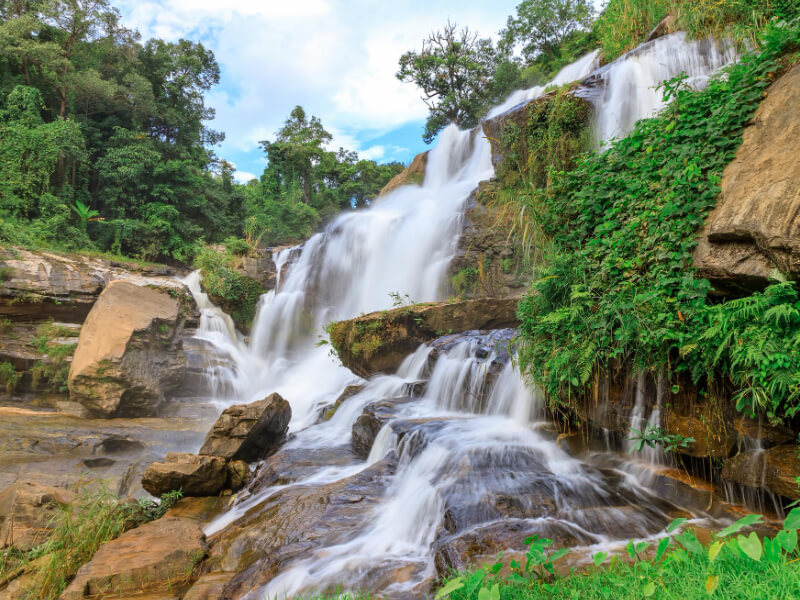
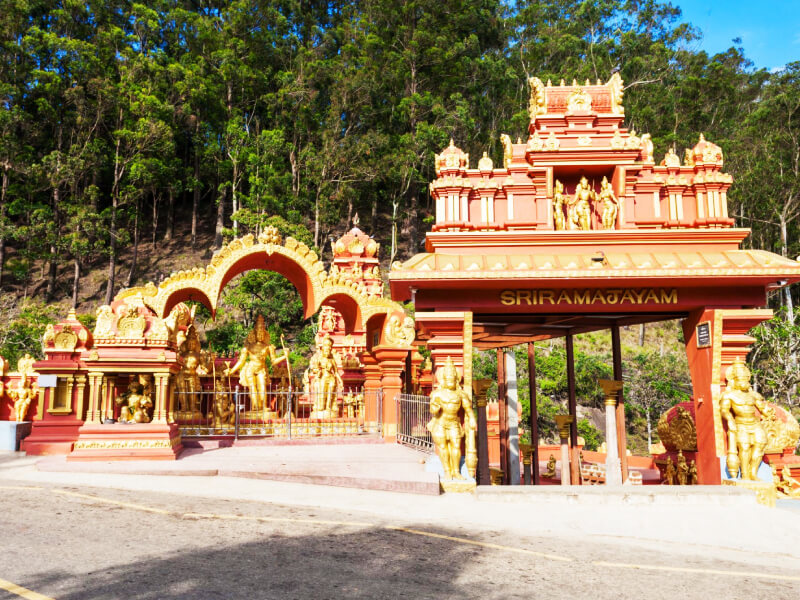
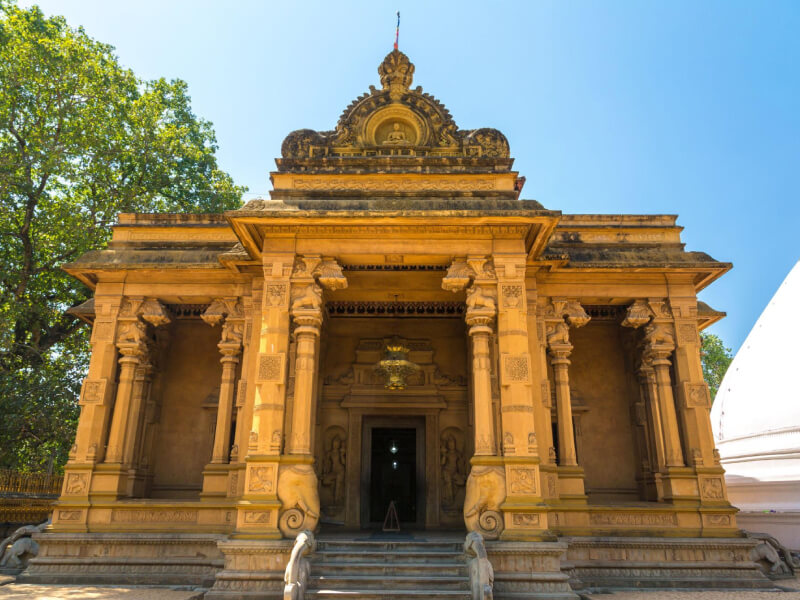
4 Nights / 5 Days Trail
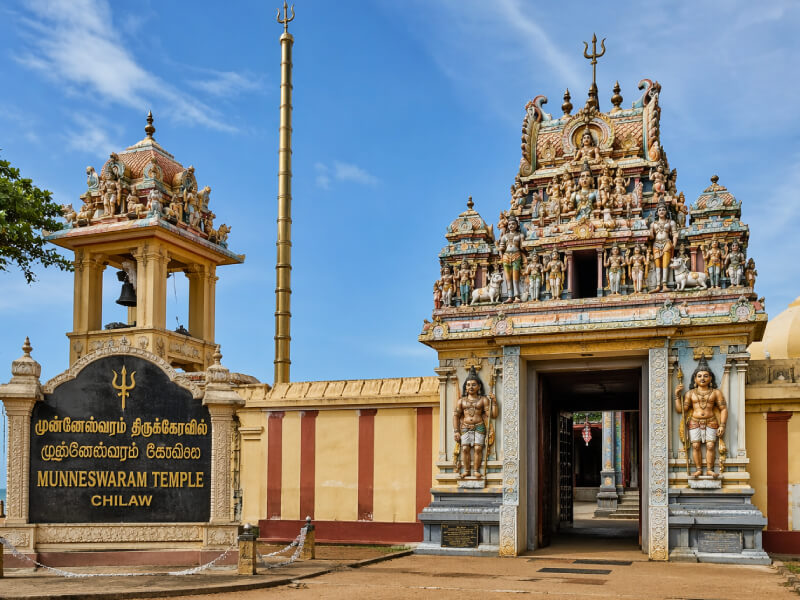
Day 1 | Munneswaram Temple - Chilaw -->
Day 2 | Ramboda Falls - Ramboda -->
Day 3 | Sita Amman Kovil - Nuwara Eliya (Sita Eliya) -->
Day 4 | Kelaniya Temple – Kelaniya

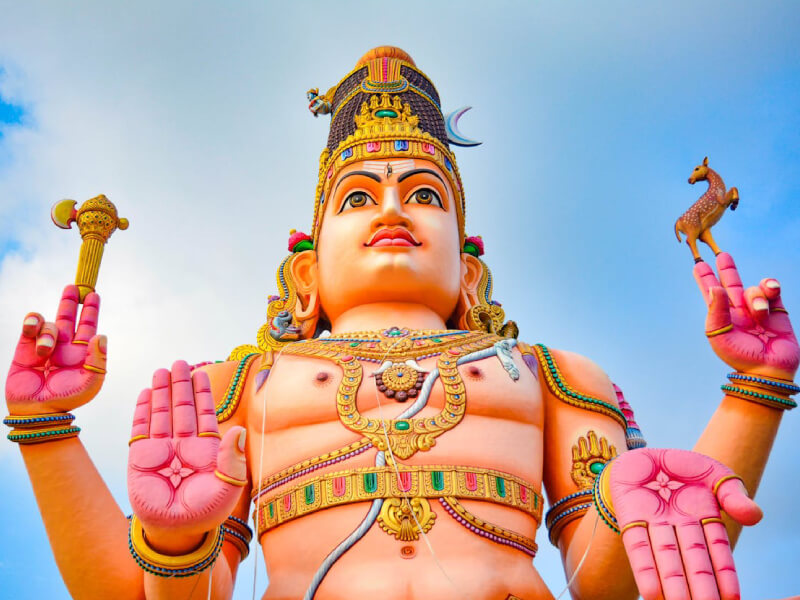

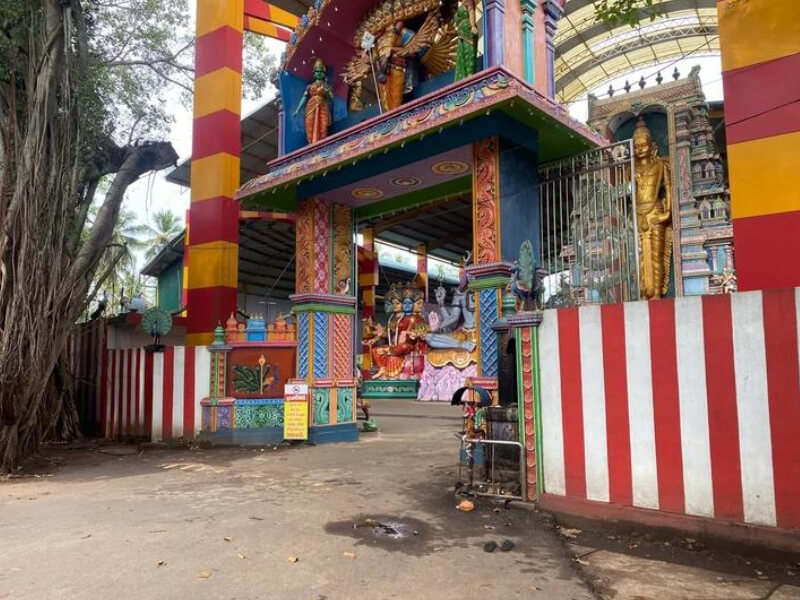
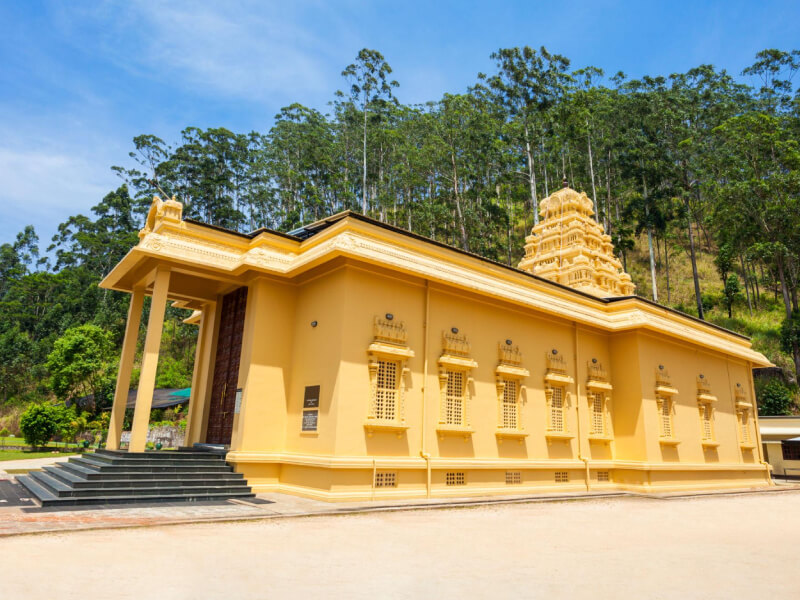
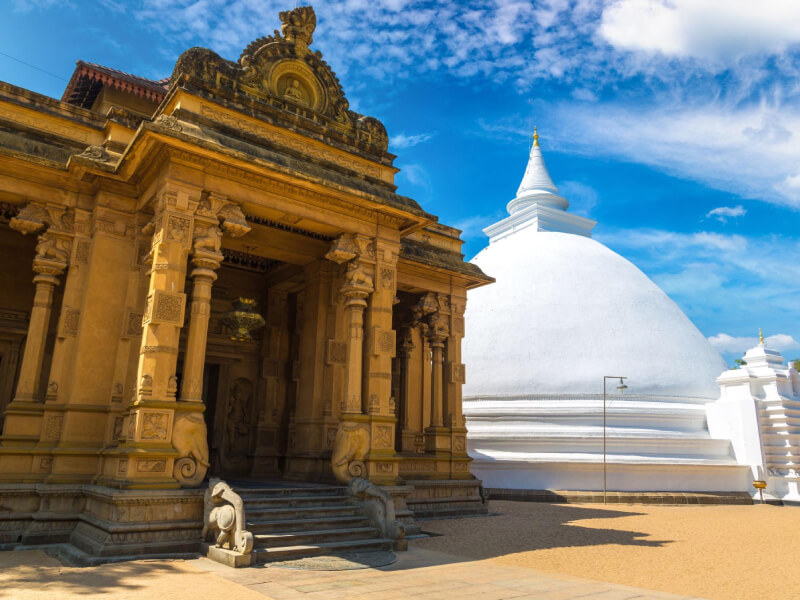
5 Nights / 6 Days Trail
Day 1 | Airport - Chilaw - Dambulla
-->
Day 2 | Dambulla - Trincomalee - Dambulla
Day 3 | Dambulla - Nuwaraeliya -->
Day 4 | Nuwara Eliya - Ella- Nuwara Eliya -->
Day 5 | Nuwar Eeliya - Colombo
-->
Day 6 | Colombo - Airport
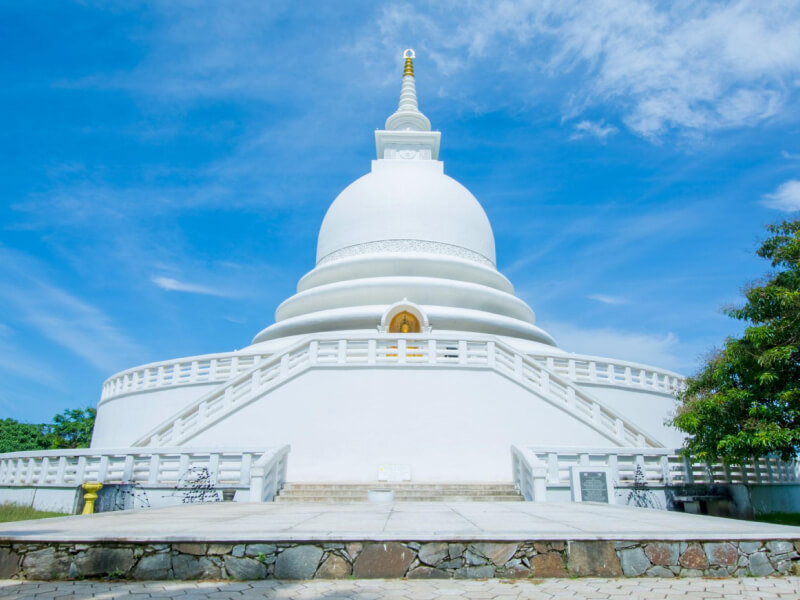

6 Nights / 7 Days Trail
Day 1 | Airport - Colombo
-->
Day 2 | Colombo - Sigiriya
Day 3 | Sigiriya - Dunuwila - Sigiriya
-->
Day 4 | Sigiriya - Trincomalee -->
Day 5 | Trincomalee - Nuwara Eliya
-->
Day 6 | Nuwara Eliya - Ella - Galle
-->
Day 7 | Galle - Airport
7 Nights / 8 Days Trail
Day 1 | Airport - Chilaw - Anuradhapura
-->
Day 2 | Anuradhapura - Jaffna
Day 3 | Jaffna - Trincomalee
-->
Day 4 | Trincomalee - Ramboda - Nuwaraeliya
-->
Day 5 | Nuwara Eliya - Kataragama
-->
Day 6 | Kataragama - Galle - Colombo
-->
Day 7 | Colombo -->
Day 8 | Colombo Airport
Package included
- Airport Pickup & Airport Drop Off
- All Transfers in Air-Conditioned Private Vehicle
- English Speaking Chauffeur Guide
- Accommodation with Breakfast & Dinner
- All Government Taxes
- No Hidden Costs
- Bottled Drinking water 1 L / person / day
Package Exclusions
- Entrance tickets to tourist attractions and activity fees.
- Visa charges and flight tickets.
- Any expenses not mentioned in the inclusions.
